
Bringing Our World Closer Together, One Child at a Time
A mission statement is easy to write. We went looking for proof it was actually true.

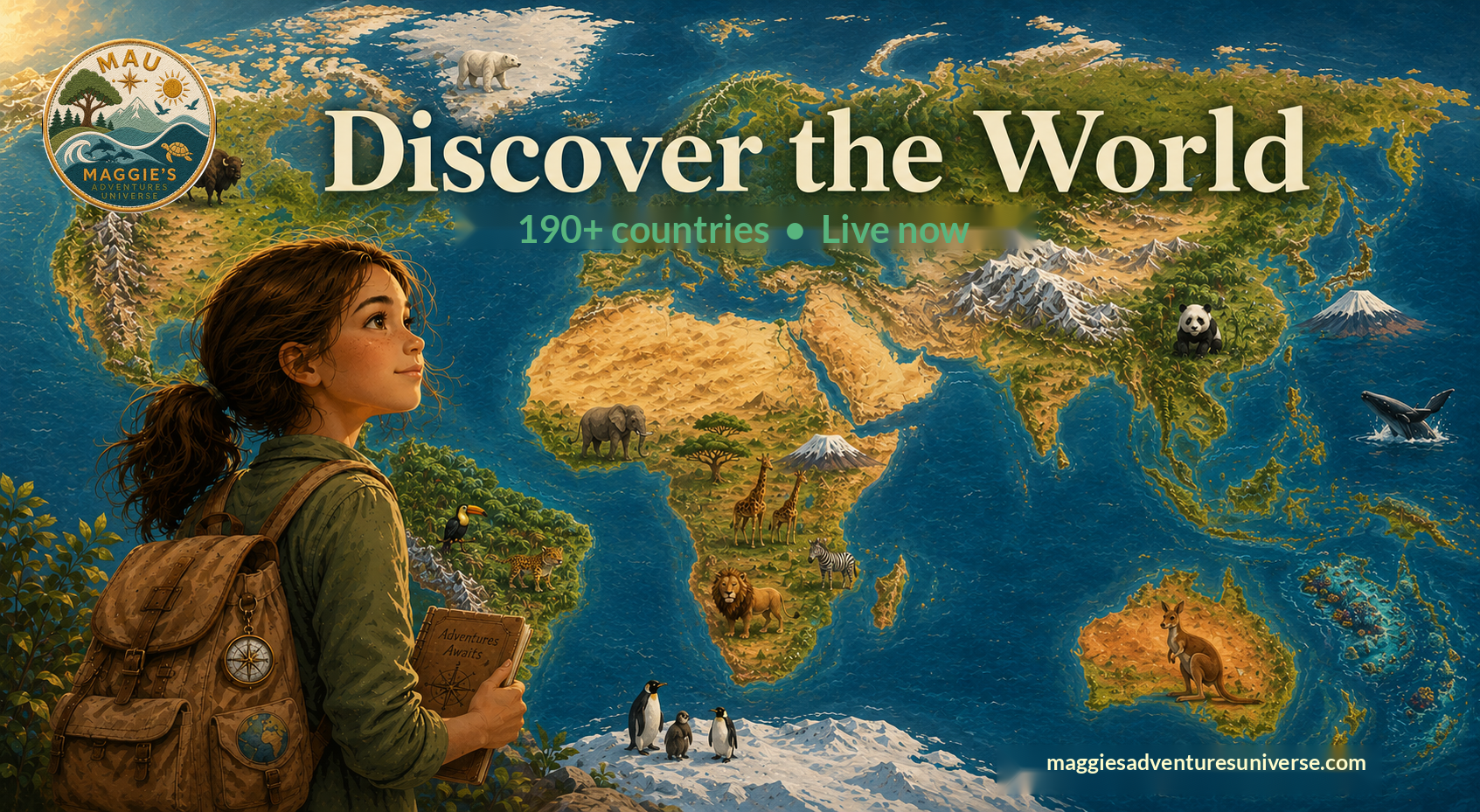
That line has been our mission statement since before Maggie had a face. For anyone meeting her for the first time, Maggie is the character at the heart of Maggie's Adventures Universe, a children's world we're building around exactly this idea: that a child who grows up curious about the wider world, rather than wary of it, grows into an adult who makes that world a little less divided. It sounds good. Mission statements are supposed to. But I've always wanted to be able to answer the harder question underneath it: does any of this actually work? Does understanding another culture actually make the world less prone to conflict, or is that just something we tell ourselves because it feels true?
I went looking for the honest answer, and pulled from my own life along the way. Here's what I found.
Does understanding differences actually reduce conflict?
More than I expected, yes, and it's one of the better-documented findings in social psychology. A meta-analysis of over 500 studies and a quarter of a million people, led by Thomas Pettigrew and Linda Tropp, found that contact between different groups typically reduces prejudice between them, and the effect held up even in the most rigorously designed studies, the ones least likely to be fooling themselves.
It isn't automatic, though. Gordon Allport, the psychologist who first proposed this idea in 1954, warned that contact under the wrong conditions can backfire, deepening the very hostility it was supposed to soften. What tends to make the difference is whether people meet as equals, working toward something in common, rather than meeting as strangers with nothing to do but eye each other warily.
I've felt how thin that line between “wrong conditions” and “the right ones” can be. A friend and I were once walking home in the early evening, passing two men sitting on a wall. One of them stared, and I mean properly stared, in the kind of way that makes your pulse pick up before you've decided to be worried. As we drew level with him, he stood and took a step toward us. I greeted him, in his own language, the way I'd learned was proper there. His posture changed instantly. The aggression went out of it. He stepped back and nodded us on our way.
I've thought about that moment often since. I don't know for certain what would have happened if I'd said nothing, or said the wrong thing, but I strongly suspect it would have ended in some kind of confrontation rather than a nod goodnight. One small piece of cultural knowledge, used at exactly the right second, was the difference between two very different evenings. That's contact theory distilled down to a single moment on a dark street: knowing how to meet someone on their own terms can turn a tense encounter into a peaceful one, almost instantly.
Does knowing a culture actually bring people together?
Here's where it gets more specific than I expected. The research on why contact works points less at facts and more at feeling. Pettigrew and Tropp found that perspective-taking and empathy do more of the work than simply knowing more facts about a culture. Knowing that a country eats rice with the right hand, or that soup isn't lifted to the mouth the way it is somewhere else, is a start, but it's the feeling of having stood in someone else's shoes, awkwardly and without knowing the rules, that seems to actually dissolve the distance between people.
I saw this play out at a dive club in Thailand, hosting a barbecue for friends and guests who'd arrived from all over the world. We could have thrown everything on one grill and called it hospitality. Instead, we ran two separate barbecues, so pork and shellfish never touched the chicken, and we kept separate dishes for the vegetarians among us, well away from any of the meat. It took more effort than doing it the easy way.
Had we not bothered, I think a fair number of our guests simply wouldn't have eaten, not out of pickiness, but because the food on offer would have crossed a line that mattered to them. That's not a small thing to get wrong at a party meant to welcome people. Understanding what different guests needed to feel comfortable turned that evening into something genuinely shared, a small cultural melting pot where everyone could eat, sit, and talk together without anyone quietly going hungry at the edge of the group.
Would knowing your neighbour actually be good for the world?
This one isn't a religious question, and the research treats it as a very practical one. Neighbourhoods where people trust and know each other, where there's a real sense of connection and a willingness to look out for one another, consistently show better health outcomes, better wellbeing, and greater resilience during hard times, including during the isolation of the pandemic.
There's an honest caveat worth naming. Some researchers have pointed to a “dark side” of tight-knit cohesion, where a strong in-group can, in the wrong conditions, turn suspicious of outsiders rather than welcoming toward them. Knowing your neighbour isn't automatically good for everyone beyond the neighbourhood. But the overall pattern is still a hopeful one: people who know the people around them tend to trust more, help more, and cope better, together, than people who don't.
Is learning someone's history a step toward understanding their beliefs?
It's a genuinely good step, just not, on its own, the whole staircase. The research is candid about this: learning facts about another group's history and traditions helps close what researchers call psychological distance, but knowledge by itself is a weaker lever than the empathy and reduced anxiety that tends to come from real, sustained contact with people, not just their history. Facts open a door. They don't walk you through it.
That's part of why we've never wanted Maggie to just recite facts about a place. History and context matter, but they're the beginning of understanding somewhere, not the end of it. How do two people with opposing views come together for someone else's sake?
This is the question I find most quietly important, and the clearest answer comes from a much-cited 1954 study of two rival groups of boys at a summer camp, known as the Robbers Cave experiment. Simply putting the two groups back in the same room did nothing to ease the hostility they'd built up. What actually worked was giving them a shared goal that neither group could reach alone, like fixing a water supply that both camps depended on. When they had to cooperate for something bigger than either side's pride, the hostility between them fell away, fast and almost completely.
I think that's the real answer to how two people with entirely different views come together for a third party's good: not by resolving their disagreement first, but by finding the thing that matters more than the disagreement, and working on that together. Agreement can come later, if it comes at all. Cooperation doesn't have to wait for it.
What this means for Maggie
None of this is a guarantee that understanding each other fixes the world. The research is honest about its limits: contact can backfire, cohesion has a dark side, knowledge alone doesn't get you all the way there. But taken together, it points somewhere real. Contact, done with patience and equal footing, softens prejudice. Empathy does more than facts. Knowing the people around you tends to make everyone more resilient. And when people need each other for something bigger than their differences, the differences have a way of becoming smaller.
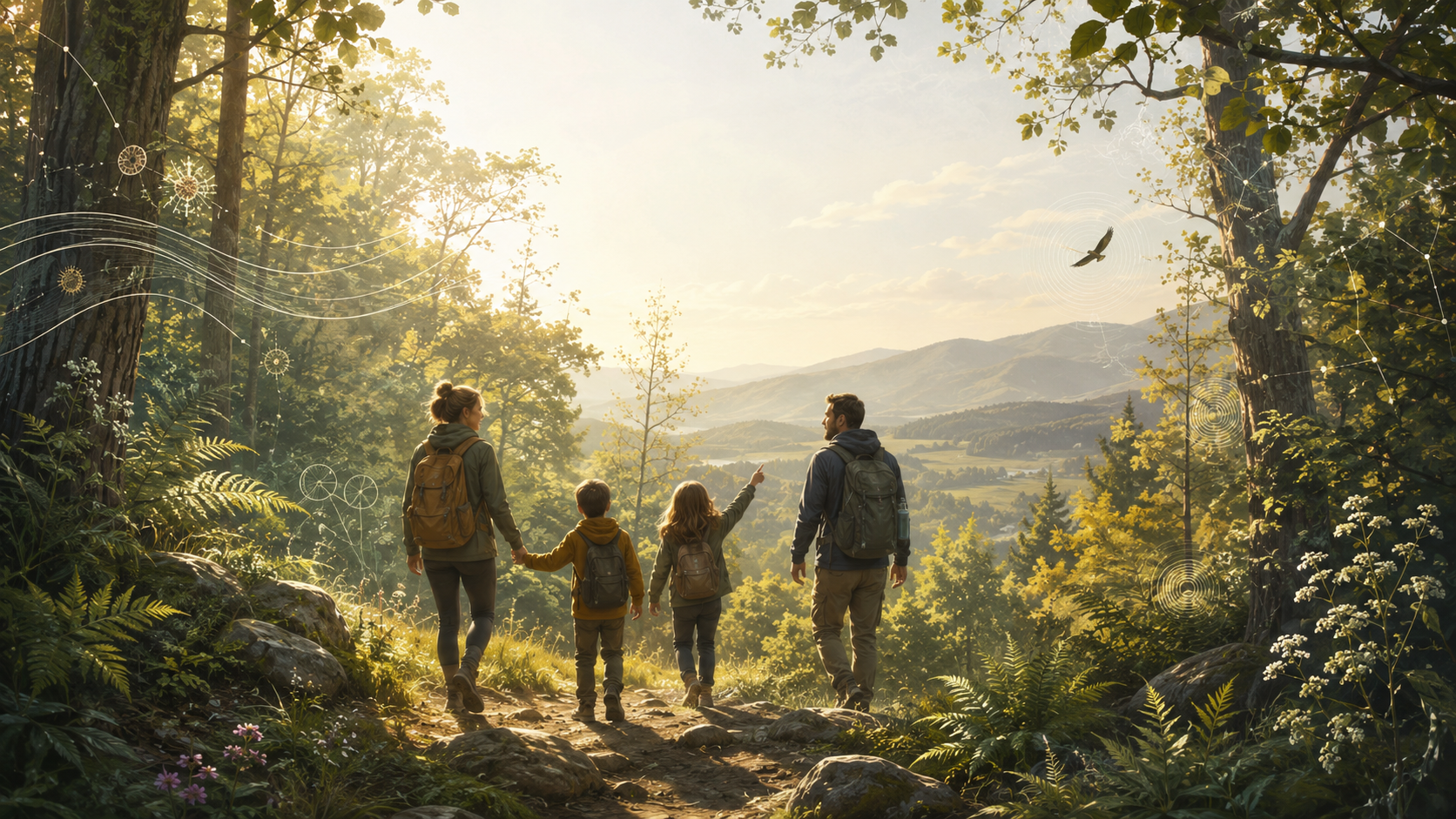
That's the world we want a child exploring Maggie's Adventures Universe to grow up believing is true, because it is. Not because someone told them to be kind to people who are different, but because they got to feel, even briefly, what a small piece of cultural understanding can actually do: turn a tense street corner into a peaceful one, or turn a party into a place where every guest, whatever they believe or however they eat, gets to sit down and share the table. One child, one place, one clumsy and honest encounter at a time. That's still how I think the world gets closer together.
References
Allport, G. W. (1954). The Nature of Prejudice. Addison-Wesley. Kim, E. S., Chen, Y., Kawachi, I., & VanderWeele, T. J. (2020). Perceived neighborhood social cohesion and subsequent health and well-being in older adults: An outcome-wide longitudinal approach. Health & Place, 66, 102420. Pettigrew, T. F., & Tropp, L. R. (2006). A meta-analytic test of intergroup contact theory. Journal of Personality and Social Psychology, 90(5), 751–783. Robinette, J. W., Bostean, G., Glynn, L. M., Douglas, J. A., Jenkins, B. N., Gruenewald, T. L., & Frederick, D. A. (2021). Perceived neighborhood cohesion buffers COVID-19 impacts on mental health in a United States sample. Social Science & Medicine, 285, 114269. Sherif, M., Harvey, O. J., White, B. J., Hood, W. R., & Sherif, C. W. (1961). Intergroup Conflict and Cooperation: The Robbers Cave Experiment. University of Oklahoma.
🌍 Travel The World Lightly 🌿

Nicolas F. S. Zaslavoglou
Founder · Storyteller · Adventurer, Maggie's Adventures Universe
Free download
The Little Explorer's Kit
A free bundle for curious families: a printable world explorer journal, a wildlife spotting sheet, and a first-words language card set.
Stay updated
Occasional notes from Maggie's world. No spam, ever.